
Most people assume that if they die without a will, the answer is simple.
“My spouse will get everything.”
“My children will figure it out.”
“My family knows what I want.”
In Texas, those assumptions can create real problems.
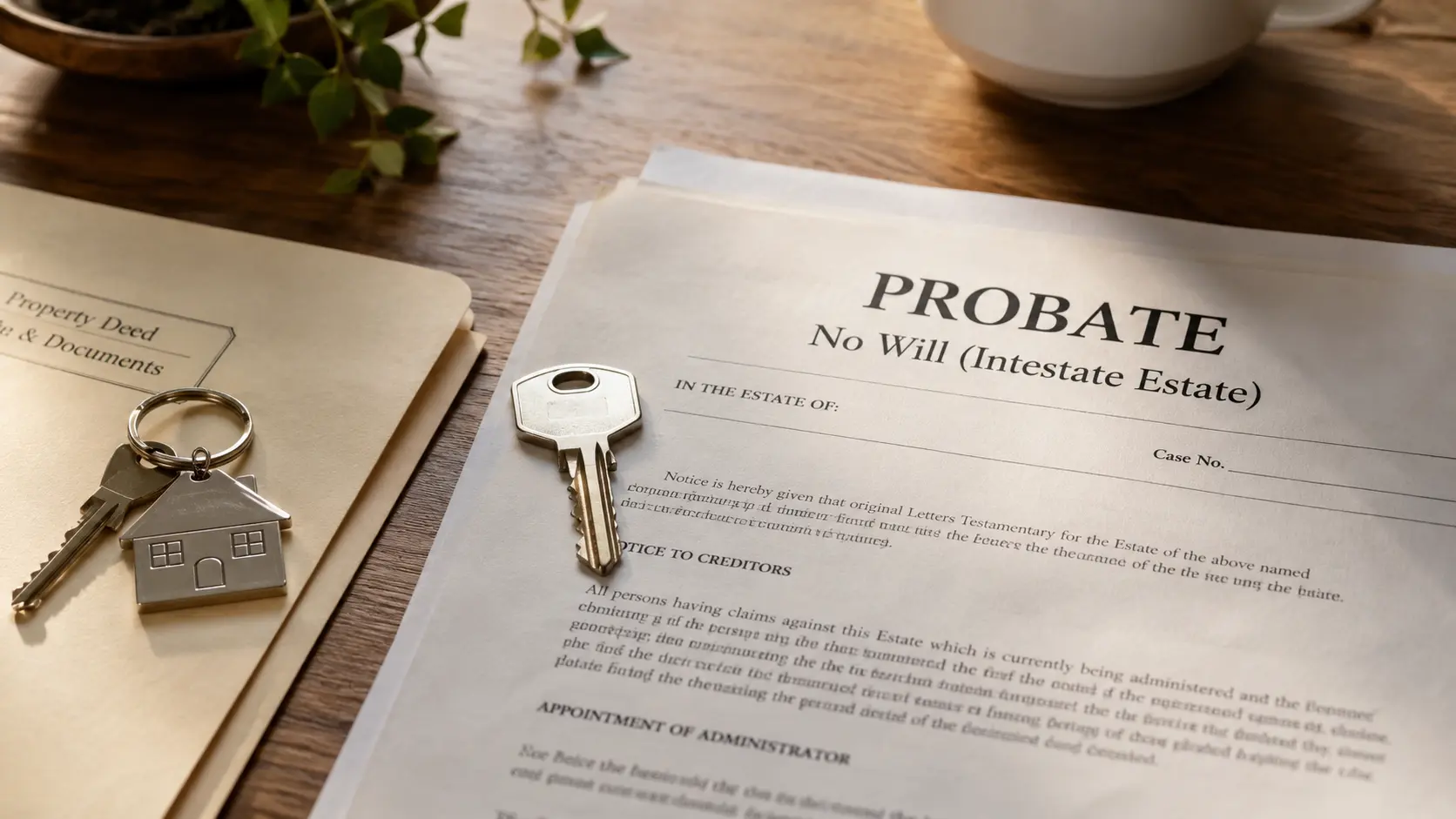
When a Texas resident dies without a valid will, the law calls it dying intestate. That means Texas law decides who inherits, what share each person receives, and what court process the family may need to go through.
The result depends on details many families have never thought about: whether property is community or separate property, whether there is a surviving spouse, whether there are children from a prior relationship, whether a partner is legally recognized, and whether any children are minors.
This guide explains what dying without a will can mean for Texas families, especially parents, blended families, homeowners, unmarried partners, and business owners.

What “Intestate” Means in Texas
“Intestate” means a person died without a valid will.
When that happens, the family may need to go through a court process to determine who the legal heirs are. Texas law allows courts to determine the identity of heirs and their respective shares through a proceeding to declare heirship under Texas Estates Code Chapter 202.
That process can involve:
- Filing an application in probate court
- Proving the family tree
- Identifying heirs
- Giving notice to interested parties
- Appointing someone to administer the estate
- In some cases, appointing an attorney ad litem to represent unknown heirs
This is not just paperwork. It can take time, cost money, and place family details into a court process.
When there is a will, the court usually has a document to review. When there is no will, the court has to reconstruct the family structure and apply the statute.
That is a very different experience for the people left behind.
How Texas Decides Who Inherits
Texas is a community property state. That matters.
Before anyone can know who inherits, property usually has to be sorted into two broad categories.
Community property is generally property acquired during marriage, with important exceptions.
Separate property is generally property owned before marriage, plus certain gifts and inheritances received during marriage.
Texas intestacy rules treat those categories differently.
If You Are Married With Children From the Same Marriage
This is the situation most people think of when they say, “Everything goes to my spouse.”
Sometimes that is partly true. But it is not the whole picture.
If all children are from the marriage between the surviving spouse and the deceased spouse, the surviving spouse generally receives the community property.
Separate property can be different.
The surviving spouse may receive one-third of separate personal property, while the children receive the remaining two-thirds. For separate real property, the surviving spouse may receive a life estate in one-third, while the children receive the remainder interest.
That means the phrase “my spouse gets everything” can be wrong even in a traditional family structure.
If You Are Married With Children From a Prior Relationship
This is where Texas intestacy can shock families.
If a married person dies with children from a prior relationship, the surviving spouse does not simply receive all community property.
The surviving spouse keeps their own half of the community property. The deceased spouse’s half may pass to the deceased spouse’s children.
In real life, this can create conflict fast.
A surviving spouse may suddenly share ownership interests with adult children from a prior relationship. That can affect the family home, bank accounts, investment assets, business interests, and other property, depending on how everything is titled.
This does not mean the children are doing anything wrong. It means the law is following a formula.
The problem is that families are not formulas.
If You Are Married With No Children
If a married person dies without children, the surviving spouse generally receives all community property.
But separate property still needs attention.
The surviving spouse may receive all separate personal property and a share of separate real property. The remaining separate real property may pass to the deceased person’s parents, siblings, or descendants of siblings, depending on who is living.
This can leave a surviving spouse co-owning real estate with in-laws.
That may be legally correct under the statute. It may also be nothing like what the couple would have chosen.
If You Are Single With Children
If you are single and have children, your children generally inherit your estate in equal shares.
If one of your children has died before you, that child’s descendants may inherit that child’s share.
This sounds simple until minor children are involved.
Children can be heirs, but minor children generally cannot manage significant inherited property on their own. That can create the need for a guardian of the estate, court oversight, management trust, or another structure.
A trust can often handle this more cleanly because it lets you decide who manages the money, how it is used, and when children receive it.
If You Are Single With No Children
If you are single with no children and no will, your estate moves through the family tree.
Depending on who survives you, property may pass to:
- Parents
- Siblings
- Nieces and nephews
- Grandparents
- Aunts and uncles
- Cousins
If no heirs can be found after the required process, property can eventually pass to the State of Texas. That is rare, but it is part of the legal framework.
The point is not that this happens often.
The point is that without a will, the law keeps looking for legal heirs, not chosen people.
Five Outcomes Texas Families Often Do Not Expect
1. An Unmarried Partner May Receive Nothing
An unmarried partner generally does not inherit under Texas intestate succession.
That can be true even if the relationship lasted for years, the couple lived together, shared bills, raised children, or considered each other family.
There is an important exception: Texas recognizes informal marriage, often called common law marriage. Under Texas Family Code Section 2.401, an informal marriage can be proven if the required legal elements are met.
But proving informal marriage after death can be stressful, expensive, and contested.
A will, trust, or beneficiary designation can make the intention clear while both people are alive.
2. Stepchildren May Not Inherit Unless Legally Adopted
A stepchild who was never legally adopted generally does not inherit from a stepparent under Texas intestacy rules.
That can feel harsh.
A person may raise a stepchild, pay for school, help buy a first car, attend every graduation, and still leave that child nothing under the default law if no adoption or estate planning document exists.
Adopted children are treated differently because adoption creates a legal parent-child relationship.
If you want a stepchild to inherit, do not rely on family understanding. Put it in a legally valid document.
3. Minor Children May Need Court Supervision
Minor children can inherit, but they usually cannot manage significant inherited property directly.
If a child receives property through intestacy, the family may need a court-supervised process to manage that property. A guardian of the estate may have to report to the court, request approval for certain actions, and account for how funds are handled.
Texas law also addresses when a guardianship of the estate is settled, including when a minor becomes an adult at 18, under Texas Estates Code Chapter 1204.
That can create a result many parents would not choose: money being released to a young adult before the parent believes the child is ready.
A trust can provide more structure. It can name a trustee, set distribution ages, allow funds for education and support, and avoid handing everything over at once.
4. The Court May Decide Who Raises Minor Children
A will is not only about property.
For parents, one of the most important reasons to have a will is to name a guardian for minor children.
Texas law allows a surviving parent to appoint an eligible guardian for minor children by will or written declaration under Texas Estates Code Chapter 1104.
Without a written nomination, the court has to decide based on the facts before it. Relatives may disagree. Multiple people may believe they are the right choice. The children may be caught in the middle of a dispute during the worst moment of their lives.
A guardian nomination does not remove the court’s responsibility to consider the child’s best interest. But it gives the court something direct: the parent’s documented choice.
That matters.
5. Probate Can Become More Complicated
Texas probate can be relatively efficient when the right documents exist.
One reason is independent administration. Texas law provides for independent administration under Texas Estates Code Chapter 401. In many cases, independent administration allows an estate representative to act with less ongoing court supervision.
Without a will, the process may be more complicated.
The family may need a determination of heirship. There may be more court involvement. There may be more people to notify. There may be disputes about who should administer the estate or who counts as an heir.
This is why “we will figure it out later” can be expensive.
Later usually means the family is grieving, the court is involved, and no one can ask the person who died what they meant.
What This Looks Like in Real Life
Consider this simplified example.
A Texas man dies without a will. He is married. He has two children from a prior relationship. He and his current spouse live in a home they bought during the marriage.
His spouse assumes she will receive everything because they were married.
His children assume they are entitled to their father’s share because they are his children.
Under Texas intestacy rules, both sides may be partly right.
The surviving spouse keeps her share of community property. The deceased spouse’s share may pass to his children. Now the surviving spouse and the children may have shared interests in property that one side thought would stay with the spouse.
That can affect whether the home is sold, refinanced, maintained, rented, or transferred.
No one has to be greedy for conflict to begin. The problem is structural. The law created shared ownership where the person who died never wrote down a different plan.
A will or trust could have addressed that directly.
What a Will Changes
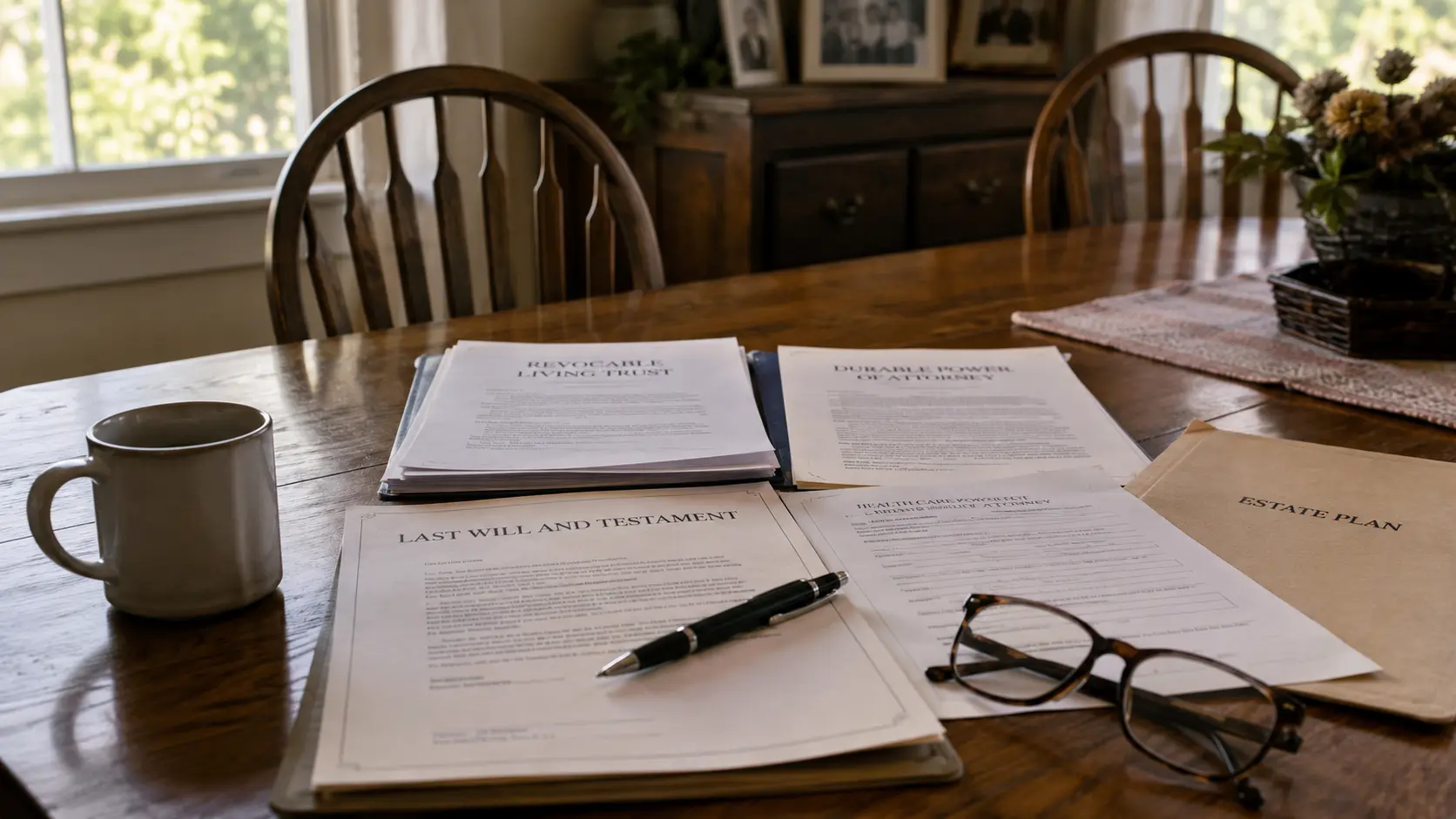
A will lets you write your own instructions instead of relying on Texas defaults.
A Texas will can:
- Name who receives your property
- Name an executor
- Request independent administration
- Name a guardian for minor children
- Include a backup plan if your first choice cannot serve
- Include stepchildren, unmarried partners, friends, charities, or others who would not inherit by default
- Reduce confusion about your wishes
A will does not avoid probate by itself. That is a separate issue.
But a will can make probate clearer, faster, and less conflict-driven because the court and family have a written document to follow.
What a Trust May Change
A revocable living trust is not necessary for every Texas family.
But it may be worth discussing if you:
- Own real estate
- Have minor children
- Are in a blended family
- Want privacy
- Own property in more than one state
- Own a business
- Want to control when children receive money
- Want to reduce probate involvement for properly funded assets
The important phrase is properly funded.
A trust only works for assets that are placed into it or coordinated with it. Signing a trust and never funding it can leave the family with many of the same problems.
A will and trust are not enemies. In many estate plans, they work together.