
Blended families are built on real relationships.
Texas law is built on legal categories.
That difference matters.
A current spouse, children from a prior relationship, shared children, stepchildren, and unmarried partners may all feel like one family at home. But if someone dies without a clear estate plan, Texas law does not ask how close everyone was. It looks at marriage, legal parentage, property ownership, beneficiary designations, and written documents.
That is why blended families need more than a basic will copied from a template.
They need a plan that answers the hard questions before the court, the bank, or the family has to.

Why Blended Families Need a More Careful Plan
In a first marriage where all children are shared, the default outcome may be closer to what the family expected.
In a blended family, the default can look very different.
For example, if a married person dies in Texas with children from a prior relationship, the surviving spouse may keep their own half of community property, while the deceased spouse’s half may pass to the deceased spouse’s children.
That can leave a current spouse sharing ownership of a home, account, or other asset with adult children from a prior relationship.
No one has to be greedy for conflict to start. The structure itself creates the conflict.
The surviving spouse may want stability. The adult children may want their inheritance. Both may have legal arguments. Neither may be wrong.
The problem is that the person who died did not leave clear instructions.
The Biggest Mistakes Blended Families Make
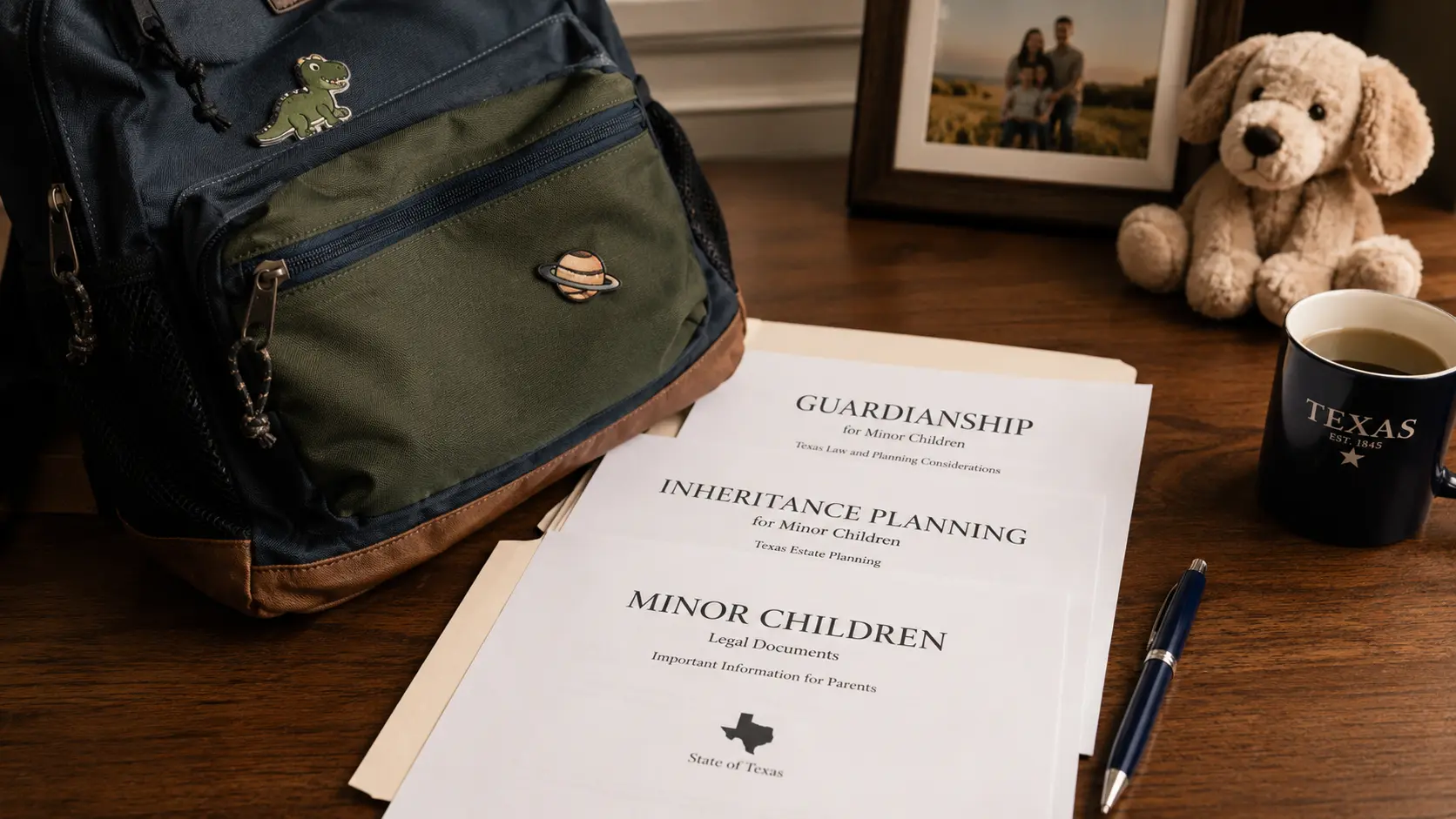
1. Assuming Everything Goes to the Current Spouse
Marriage does not automatically solve inheritance in every Texas family.
If there are children from a prior relationship, Texas default rules can divide property in ways that surprise everyone. A will or trust can say clearly what should happen instead.
2. Leaving Everything to the Spouse With No Protection for Prior Children
Some people write a simple will that says, “Everything to my spouse.”
That may sound loving. But in a blended family, it can accidentally disinherit children from a prior relationship.
Once the surviving spouse receives assets outright, those assets belong to that spouse. They can change their own will, remarry, spend the money, or leave it to different people.
A trust can sometimes solve this by supporting the surviving spouse while preserving assets for children later.
3. Forgetting Old Beneficiary Designations
A will does not control everything.
Retirement accounts, life insurance, and payable-on-death accounts often pass by beneficiary designation. That means an old form may override what the will says.
For blended families, this is dangerous.
A retirement account may still name an ex-spouse. A life insurance policy may name only one child. A payable-on-death account may not match the new plan at all.
Every blended family should review beneficiary designations as part of the estate plan.
4. Assuming Stepchildren Automatically Inherit
A stepchild who was never legally adopted generally does not inherit under Texas intestate succession.
That can feel unfair, especially when the relationship is close. But the law looks for a legal parent-child relationship, not emotional closeness.
If you want a stepchild to inherit, name them clearly in a will, trust, or beneficiary designation.
5. Ignoring the Unmarried Partner Issue
Long-term partners can be especially vulnerable.
Unless there is a valid will, trust, beneficiary designation, or legally proven informal marriage, an unmarried partner generally does not inherit under Texas default rules.
Texas does recognize informal marriage in certain situations, but it has legal requirements and can be difficult to prove after death.
A partner should not have to prove the relationship in court while grieving.
Put the plan in writing.
6. Not Talking About the Plan
This is not only a legal issue. It is a family issue.
Many probate fights begin because adult children discover the plan after death and assume someone influenced the parent.
A family conversation does not need to reveal every dollar. But it can explain the structure:
“My spouse will be protected.”
“My children will still inherit.”
“Here is who is in charge.”
“Here is why I made these choices.”
That one conversation can prevent years of suspicion.
Estate Planning Tools That Help Blended Families
A Carefully Drafted Will
A will can name beneficiaries, appoint an executor, name guardians for minor children, and make clear who should receive what.
For blended families, the wording matters.
Do not rely on broad language if your family structure is specific. Name the people. Define the roles. Include backups.
A Revocable Living Trust
A revocable living trust can be useful for blended families because it allows more control than a simple will.
A trust can:
- Let a spouse use certain assets during life
- Preserve assets for children after the spouse dies
- Provide rules for minor children
- Keep details more private
- Reduce probate issues for properly funded assets
The key phrase is properly funded. A trust only helps if the right assets are actually connected to it.
A Marital Trust or QTIP Trust
Some blended families use a marital trust or QTIP-style trust.
In plain English, this kind of structure can support a surviving spouse during life while preserving remaining assets for children later. Federal QTIP rules involve a surviving spouse having a qualifying income interest for life and an election under the tax code.
This is not a DIY area. It needs careful drafting.
Beneficiary Designation Review
Every blended family should review:
- Life insurance
- 401(k)s
- IRAs
- Payable-on-death bank accounts
- Transfer-on-death accounts
- Employer benefits
- Old accounts from prior jobs
The will and the beneficiary forms should not fight each other.
Marital Property Agreement
A marital property agreement can clarify what is community property and what is separate property.
This can matter when one spouse owned a home, business, or investment before the marriage. Texas law allows spouses to partition or exchange community property by agreement.
For blended families, this kind of agreement can reduce confusion later.
Powers of Attorney and Healthcare Documents
Estate planning is not only about death.
Blended families also need clarity during incapacity.
Who makes medical decisions? Who can manage money? Who can speak to doctors? Who can access information?
At minimum, each spouse or partner should consider:
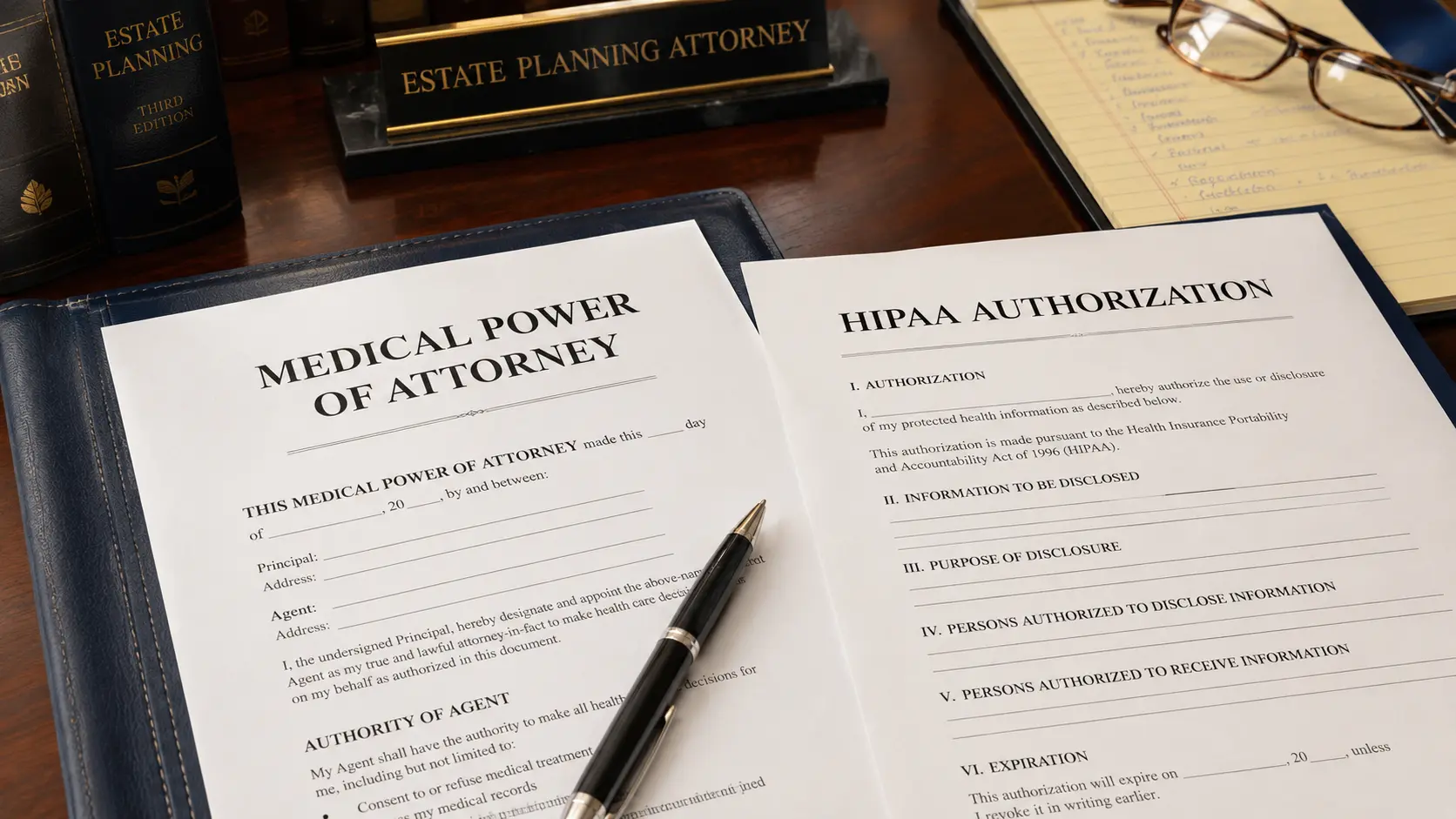
- Durable Financial Power of Attorney
- Medical Power of Attorney
- HIPAA Authorization
- Directive to Physicians
This matters even more when adult children, current spouses, former spouses, or long-term partners may disagree.